About Haoxiaoer: Making Digital Goods Purchases a Little Simpler
Haoxiaoer is a one-stop digital marketplace for Gmail, Apple ID, social accounts, gift cards, AI tools, and overseas mobile services, with self-service ordering, automated delivery, and after-sales support.
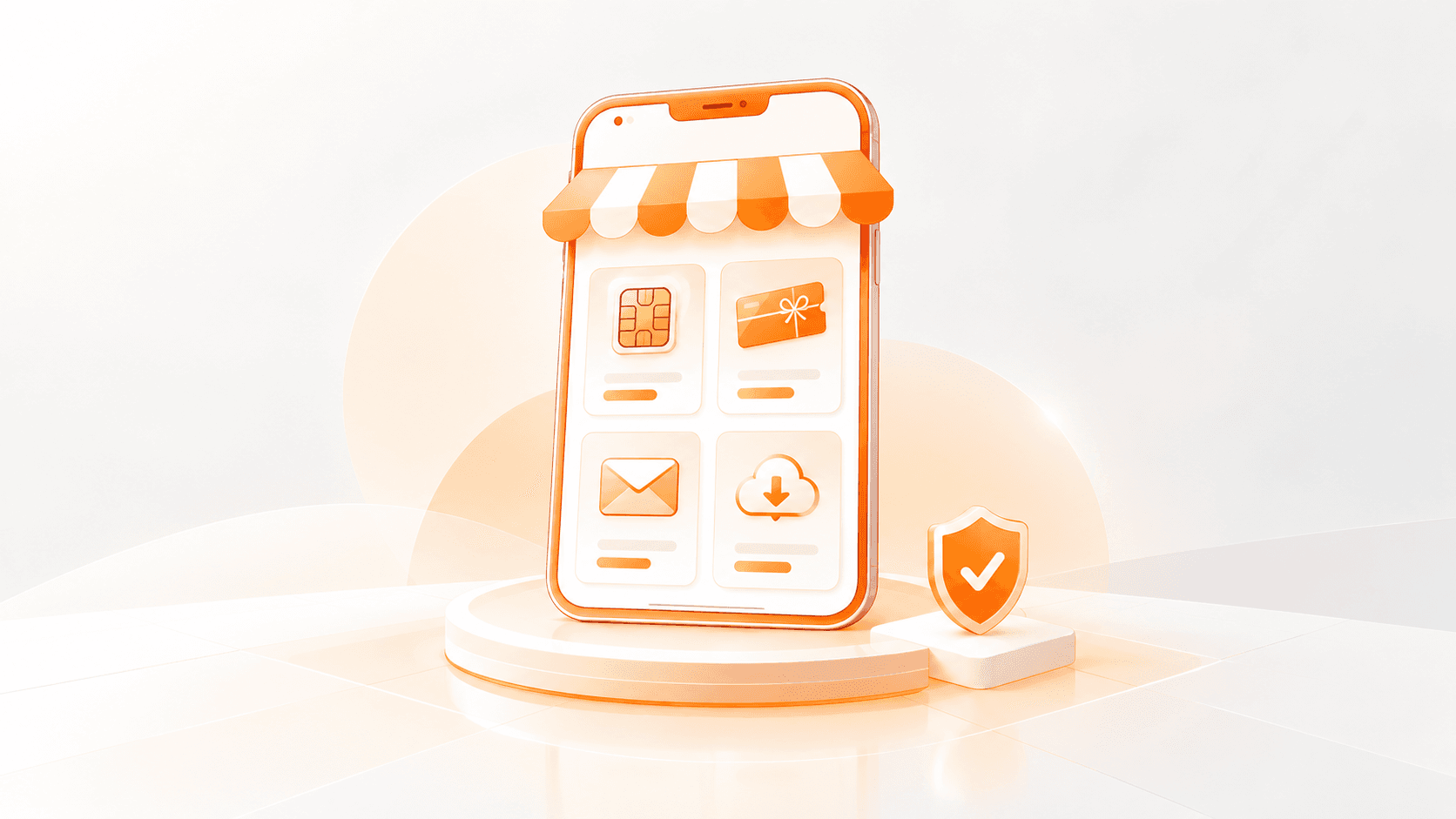
If you're encountering Haoxiaoer for the first time, you might think of us as an "account-selling website." That's not wrong, but it's not the whole picture. What Haoxiaoer really aims to be is a one-stop trading platform for digital goods and online services. When users need Gmail, Apple ID, overseas social media accounts, gift cards, AI tools, overseas communication products, or other digital goods, they don't have to search across different websites, forums, and private channels. Instead, they can browse products, choose specifications, complete payment, and receive delivery in one relatively clear marketplace.
We've always felt that digital goods themselves aren't complicated. What actually causes trouble is often a purchase process that isn't transparent enough: you don't know if something is in stock, you're not sure what specifications you're buying, you don't know when delivery will happen after payment, and if there's a problem, you can't find where to get follow-up help. These are exactly the issues Haoxiaoer wants to solve—small things that actually have a big impact on the experience.

1. What kind of platform is Haoxiaoer?
Simply put, Haoxiaoer is a one-stop global digital account purchasing platform. Currently, the platform covers email accounts, Apple ID, social media accounts, gift card codes, AI tools, overseas SIM cards, and other types of digital goods and online services. Users can go to the relevant category based on their actual needs, then view specific product specifications and stock.
We haven't made the platform a traditional "contact customer service for a quote" model. For digital goods that are in stock, the product, price, and inventory are displayed directly on the page. After confirming specifications, users can place orders themselves, and once payment is complete, the system delivers according to the product rules; order status can also be checked. For services that require manual processing, follow-up steps are completed according to the instructions on the corresponding page.
Buying a digital product shouldn't be more troublesome than buying an ordinary product. What users really need to know is simply: do you have what I need, what are the specifications, how much does it cost, how is it delivered, and where do I go if something goes wrong?
Being able to explain this information clearly before purchase is more meaningful than piling on promotional words.
2. We want to make digital goods more like a normal marketplace
In the early days, digital account and virtual goods transactions often relied on chat apps, forums, or private sellers. If you needed an account, you first found a contact, then asked if they had stock; if you wanted multiple specifications, you had to go back and forth to confirm prices. After payment, sometimes you still had to wait for a human to send the goods.
For users who buy once in a while, these problems aren't obvious. But when purchases increase, or when you start needing Gmail, Apple ID, overseas communication, gift cards, and other different things, this way of trading becomes fragmented.
So Haoxiaoer chose an approach closer to regular e-commerce: products are categorized by type, specific specifications are on the product page, stock status is displayed directly, and whether something is available or temporarily out of stock is made clear before users place an order. For digital accounts and similar items suitable for automation, delivery is completed through the system as much as possible, rather than requiring users to wait for a human reply after payment.
We hope that when users come to Haoxiaoer, they don't need to learn a complicated purchasing process first. Find the product, read the description clearly, then decide whether to buy. That should be the most basic experience of a digital marketplace.
3. Product types
Gmail and Apple ID are where many users first discover Haoxiaoer, but they aren't the whole platform.
Different users have very different needs for digital goods: some need Gmail to sign up for overseas tools or receive emails; some need Apple IDs from different regions to download apps; others are looking for social media accounts, gift cards, AI tools, or overseas communication products.
If every need requires finding a new channel, it's actually a huge waste of time. Haoxiaoer now emphasizes "one-stop." Here, "one-stop" doesn't simply mean chasing more products; it means gradually organizing related digital goods into the same system. You might come just to buy Gmail this time, but next time when you need other digital products, you can still come back and check first, instead of starting your search from scratch every time. The platform homepage is currently categorized by scenarios such as email, Apple ID, social media accounts, gift cards, AI tools, and overseas SIM cards.
Of course, digital goods update quickly. Some items will be in stock, some will be temporarily out of stock, and prices and specific specifications may change. We prefer to let product pages play the role of "real-time information," rather than promising in an introductory article that a certain price will never change or a certain specification will always be available. Haoxiaoer's existing platform description also makes it clear that product prices, inventory, and delivery information should be based on the current product page and checkout page.
4. About after-sales support
Digital goods have another difference from ordinary goods: delivery completion doesn't necessarily mean the order is complete. Especially for account-type products, after the first login there may still be password changes, security settings, region selection, or identity verification. Rules on different platforms change frequently, and without any guidance, new users can easily be unsure what to do next.
So in addition to product pages, Haoxiaoer has also been continuously adding blog posts and usage guides.
The website has already compiled tutorials related to Gmail, Apple ID, WhatsApp, and more, covering first login, security settings, common issues, and how to use products after purchase. Our idea isn't to cram every problem into a customer service chat window, but to organize issues that can be explained in an article into content users can look up again later.
If it's truly a problem with an order, delivery, or account usage that can't be resolved on your own, after logging in you can continue the conversation through the ticket channel in the user center. The platform's existing after-sales instructions also recommend that users submit their order number and necessary error screenshots to help verify the specific issue.
For a digital marketplace, we believe after-sales support shouldn't just be a single sentence at the bottom of the page. Whether a product has an issue, which part the issue belongs to, and how it should be handled—all of these should have relatively clear entry points.

5. What Haoxiaoer wants to do next
We don't want Haoxiaoer to be just a website users occasionally find through search and leave after buying something. A more ideal state is for it to gradually become an entry point for digital goods.
Individual users can find the accounts and digital products they need here; cross-border teams can reduce the time spent repeatedly searching for procurement channels; users with bulk business needs can also apply for the platform's API to integrate product catalogs, inventory, ordering, and automatic delivery capabilities into their own business systems.
On the other hand, we will continue to improve product descriptions, usage tutorials, and purchasing guides.
The digital goods industry changes quickly: platform rules update, product specifications adjust, and the issues users truly care about keep changing. Rather than writing a bunch of pretty words that are always correct, we'd rather keep organizing these changes as they happen.
If a product is in stock now, show the current inventory; if there are differences between specifications, explain them on the product page as much as possible; if users don't know how to use something, provide the corresponding tutorial; if there's an order problem, leave an after-sales entry point where it can be handled further.
Haoxiaoer is still being improved, and there's no need to avoid that. But we hope it increasingly resembles a normal, clear, easy-to-use digital marketplace, rather than a temporary channel where you have to add a friend first and ask back and forth before completing a transaction.
Conclusion
If we had to introduce Haoxiaoer in one sentence, we'd prefer to say: "Haoxiaoer is a platform that makes it easier for users to find, buy, and use digital goods." Accounts, gift cards, overseas communication, or other digital products are just product forms. What really matters is whether the purchase process can be simple enough, whether product information can be understood clearly, and whether there's somewhere to continue solving problems after delivery. This is what Haoxiaoer is doing now and plans to keep doing for the long term.
If you're here for the first time, you can start with the product you actually need. There's no need to study Haoxiaoer in a complicated way. Find what you need, read the product description clearly, and then decide whether it's right for you. That's enough.
How does this look for a blog post published on Haoxiaoer's blog page?